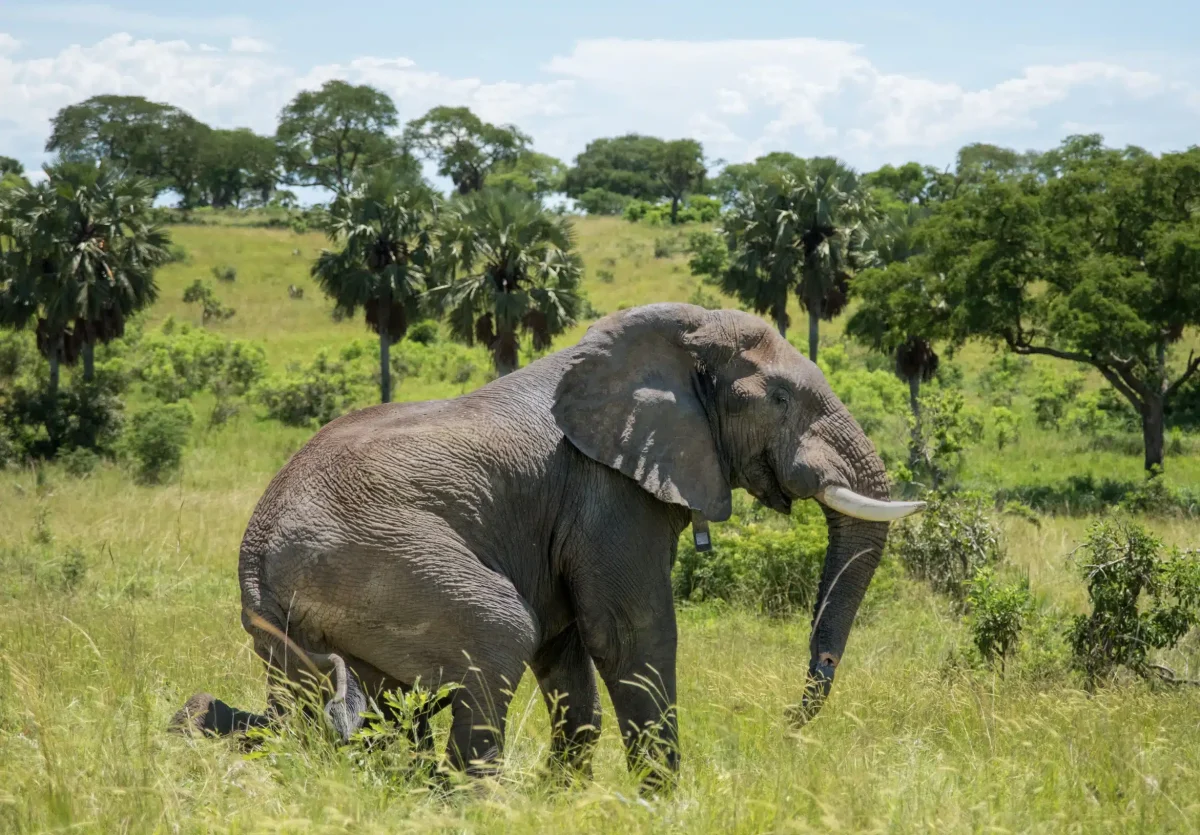
Documenting Elephant Collaring in Murchison Falls National Park: Mitigating Human-Wildlife Conflict and Influencing Conservation Policy

The Murchison Falls National Park (MFNP) in Uganda is a conservation haven, home to a diverse range of wildlife, including the African elephant (Loxodonta africana). However, the park has long faced the challenge of human-elephant conflict, where agricultural activities and human settlements encroach on elephant habitats. This conflict has stimulated the need for innovative conservation strategies, among which elephant collaring has emerged as a critical tool. This article examines the implementation of light GPS collars on elephants in MFNP, its role in reducing human-wildlife conflict, and its influence on conservation policies.

Elephant collaring involves fitting elephants with GPS-enabled collars, allowing researchers and park authorities to track their movements in real-time. In MFNP, the deployment of lighter, more efficient collars has enhanced the monitoring process. These collars are designed to minimise discomfort for the elephants, ensuring their natural behaviours remain largely unaffected.

The data collected from the collars is pivotal in understanding elephant migration patterns, habitat utilisation, and interactions with human settlements. This information is crucial for developing targeted strategies to mitigate conflict and promote coexistence.

One of the primary benefits of elephant collaring in MFNP is its role in reducing human-wildlife conflict. By tracking elephant movements, park authorities can predict and prevent potential encounters between elephants and local communities.

For instance, when elephants approach farmlands or settlements, alerts can be sent to rangers and local stakeholders, allowing for timely intervention. This proactive approach has significantly decreased incidents of crop raiding and property damage, fostering a more harmonious relationship between humans and elephants.

Moreover, collaring helps in identifying critical corridors and habitats that need protection, guiding conservation efforts to areas most vulnerable to human encroachment. This ensures that elephants have safe passage and access to essential resources without venturing into human-dominated landscapes.
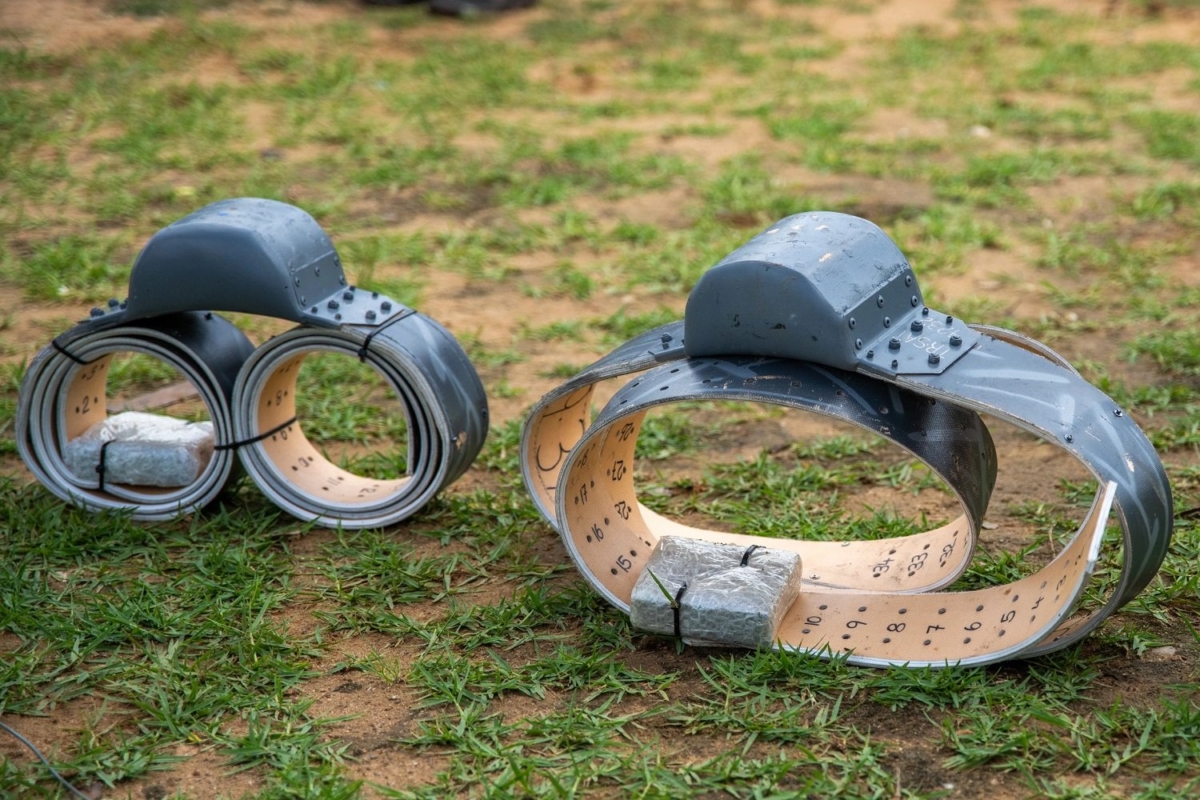
Elephant Collars at Murchison Falls National Park. (photo by Raymond Kagumire)

The insights gained from elephant collaring extend beyond immediate conflict mitigation; they influence broader conservation policies and land-use planning. The real-time data provides empirical evidence for policymakers, supporting the formulation of evidence-based conservation strategies.

For example, the data can inform the creation of buffer zones around protected areas, ensuring that agricultural expansion does not infringe upon elephant habitats. Additionally, it aids in the development of community-based initiatives that promote sustainable agriculture and wildlife-friendly practices, aligning local economic activities with conservation goals.

Collaring also plays a role in transboundary conservation efforts, as elephant movements often span beyond national borders. By collaborating with neighbouring countries, Uganda can develop cohesive policies that address the needs of migratory elephant populations across the region.

The implementation of elephant collaring in MFNP has yielded significant conservation and community benefits. It has enhanced the capacity of park authorities to manage elephant populations effectively, ensuring their conservation while minimising adverse impacts on local communities.
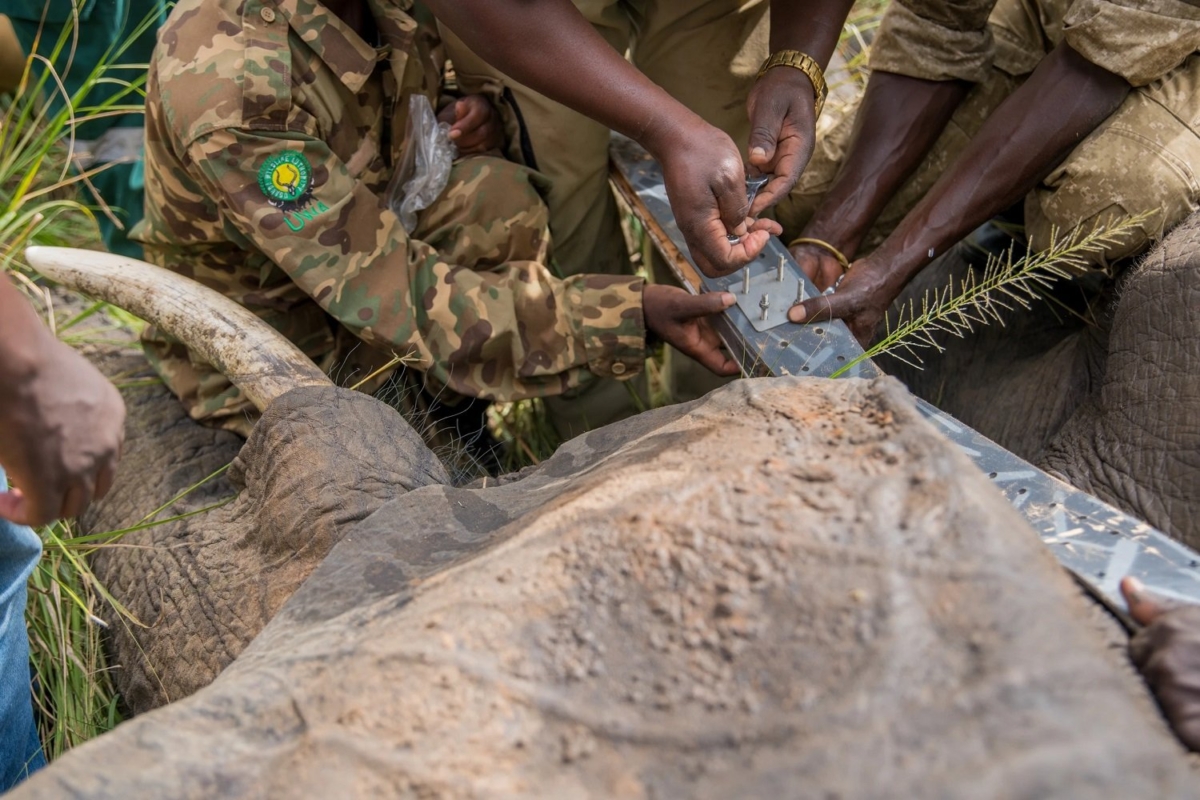
UWA staff and other collaborating partners placing collars on an elephant in Murchison Falls National Park (Photo by Raymond Kagumire

The data-driven insights from collaring also contribute to global conservation knowledge, providing valuable case studies for similar initiatives worldwide. This exchange of information promotes best practices in wildlife management and encourages the adoption of innovative technologies in conservation.

Elephant collaring in Murchison Falls National Park represents a pivotal advancement in the effort to mitigate human-wildlife conflict and enhance conservation practices. By providing real-time data on elephant movements, collaring enables proactive measures to prevent conflict, informs evidence-based policy making, and fosters community engagement. As a model for integrating technology and conservation, it highlights the potential for innovative approaches to harmonise human and wildlife interests, ensuring a sustainable future for both elephants and local communities.
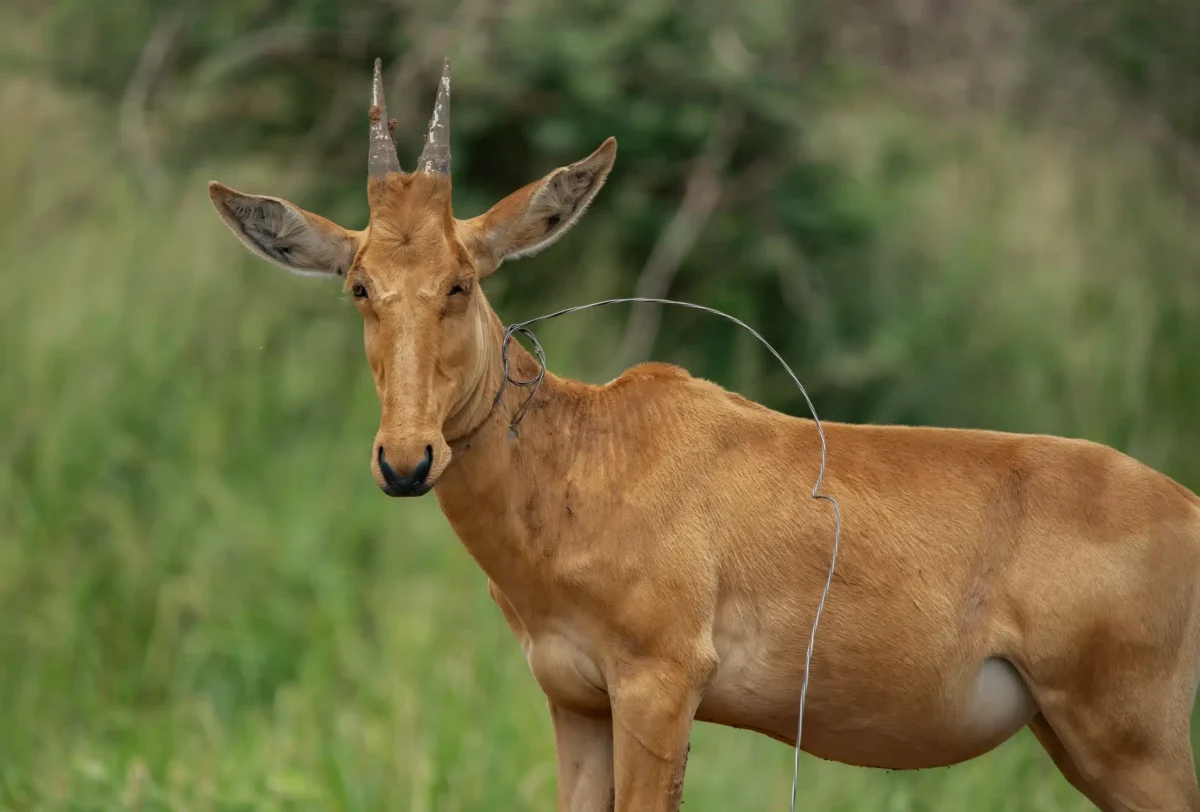
A Call to Safeguard Wildlife from Snares and Poaching: Protecting the Wild from Man

Recently, while documenting wildlife conservation efforts at Murchison Falls National Park, I witnessed an upsetting sight that left a lasting impression: a Lelwel Hartebeest entangled in a painful wire snare. This unfortunate encounter served as a stark reminder of the grave threats faced by these creatures due to poaching—a practice that not only harms animals in the wild but also disrupts our ecosystem.

Wire snares are a prevalent tool among poachers due to their low cost, easy availability, and simplicity in setting up. However, their impact on wildlife is devastating and complex. These snares do not target specific animals, meaning any creature that walks into a snare’s path is at risk, leading to unintended casualties among various species, including those not sought by poachers. The inhumane suffering inflicted by these traps cannot be overstated; animals caught in snares often endure prolonged pain as the snares tighten with their struggles, causing severe injuries, deep wounds, and a slow, painful death.

The ecological imbalance caused by the removal of key species like the Lelwel Hartebeest from their natural habitats can disrupt the balance of the ecosystem. Predators lose their prey, and plant life can become overgrown without herbivores to manage it. Furthermore, wildlife tourism, a significant source of revenue for many regions including Uganda, is jeopardized by the decline in wildlife populations due to poaching, ultimately impacting local economies.

Efforts to combat poaching and preserve the Lelwel Hartebeest are not merely about saving one species but about protecting the natural balance that supports all life on our planet. By eliminating the destructive practice of poaching, we can secure a brighter future not only for these animals but for the generations to come. Imagine the next generation learning about the Lelwel Hartebeest only by visiting a museum when these animals could still freely roam the earth as they have a right to.

A Uganda Wildlife Authority (UWA) ranger removes a wire snare left by a poacher. (Photo by Raymond Kagumire)

To combat this challenge, stricter enforcement of anti-poaching laws with severe penalties is essential to deter poachers. Governments and wildlife authorities must take a firm stand against these illegal activities. Community engagement is equally important; local communities should be educated and involved in conservation efforts. Providing alternative livelihoods can reduce the dependency on poaching for income, thereby protecting wildlife.

Technological advancements offer promising solutions. Utilizing technology such as drones and GPS tracking can help monitor wildlife and detect poaching activities in real time. Additionally, increased patrols and surveillance in national parks and wildlife reserves can prevent poachers from setting snares, thus protecting the animals.

Uganda Wildlife Authority Official Sensitizes the Community on the Dangers of Snares at Murchison Falls National Park near Packwach. Photo by Raymond Kagumire.

Raising public awareness about the impact of poaching on wildlife and ecosystems can encourage public support for conservation efforts.
We must stand united in our commitment to protect these beautiful creatures and the diverse wildlife of Murchison Falls National Park.

MaraMambo Media

Maramambo Media is a team of young, creative, and versatile production professionals driven by passion and precision. We stand among Uganda’s leading media production companies, mastering the art and trade of videography, photography, and 3D animation.

At our core, we are storytellers. We believe in the power of human narratives — stories that inform, entertain, educate, and inspire. Every idea we craft begins with your story. From that story, we design compelling visual experiences that move people and meet the unique purpose of your brand or audience.

Maramambo Media was founded on a simple yet profound belief:
that media — whether visual, audio, or artistic — needed a new lens, a fresh perspective, and a deeper purpose. We represent that shift. Our work embodies transformation, creativity, and authenticity.

Our name, Maramambo, draws inspiration from the breathtaking beauty of the Masai Mara — a place of color, wonder, and life. From that inspiration, we visualize stories that mirror the magic of our clients’ ambitions.

Our team combines over eight years of professional experience across multiple disciplines. We bring together diverse talents — men and women who are qualified, imaginative, and relentlessly committed to quality. For every project, we invest time in strategic planning, detailed execution, and uncompromised standards. We never cut corners. We go beyond expectations.

Through every production — big or small — we deliver value, creativity, and reliability. We work longer, think deeper, and move faster because we care about our clients’ stories and the impact they make.

At Maramambo Media, we don’t just produce content — we craft experiences that change, transform, and connect.